Mount Baker

Grand County Colorado History

Whether you're just stopping by for a visit and some inspiration from the past or you're doing serious research, we're glad you're here. You'll find over 200 articles on a variety of topics - browse and enjoy!

Have an idea for an article or want to contribute one? Send us a note on the contact form.

This website is a project of the Community Alliance of Libraries, Museums and Schools (CALM).  For more information,
call Dede Fay at 970-531-7020.

Explore the History & Culture of Grand County

The Grand County Historical Association (GCHA) was founded in 1974 as a 501(c)3 non-profit organization to bring together people interested in history and to preserve the history, historical artifacts, and historical buildings in Grand County, Colorado. GCHA operates three historical museums. http://www.grandcountymuseum.com/index.html

The Grand Lake Area Historical Society (GLHS) was formed in 1973 to preserve and protect the only remaining log hotel built in Grand Lake prior to 1900. This nonprofit organization maintains the Kauffman House Museum -- built in 1892 and operated as a hotel until 1946 by the Kauffman family. http://www.kauffmanhouse.org/

The Moffat Road Railroad Museum is still in the process of funding the building expenses. The museum will be an 8,000 sq. ft. building to house the "Moffat Road" Model Railroad - the Grand County Model Railroad Club’s display of the Denver & Northwestern Pacific R.R. from Denver, Colorado to Craig, Colorado circa: 1905 thru 1960’s.  The museum will be built and operated by the Grand County Model Railroad Club, a 501(c)(3) Colorado not-for-profit corporation. http://www.moffatroadrailroadmuseum.org/

The Grand County Characters are dedicated to the accurate portrayal of Grand County and Colorado history, presenting educational and entertaining programs for community and private events. http://www.grandcountycharacters.org/index.htm


Articles to Browse

Ute Legend of Canyons

Major John Wesley Powell was in the first party to make a recorded climb of Pikes Peak in 1868.  Later, he would lead the first expedition of the Green and Colorado (Grand) Rivers. He was very interested in the Indian tribes that he encountered and later became head of the new U.S. Bureau of Ethnology.  He recorded this legend as told by the Utes on his first visit to the Colorado mountains, during his Pikes Peak climb.

A chief of the Utes mourned the death of his beloved wife, and his grief was so deep, that no one could console him.  Then the Great Spirit, Ta-Vwoats, appeared to him and promised to take him southwest to where he could see where his wife had gone, if he would promise to grieve no more.

Ta-Vwoats rolled a magical ball before him and it crushed mountains, earth and rocks, making a trail to the land of the afterlife.  Following the ball was a rolling globe of fire which the Great Spirit and the chief followed.  At last they were in the happy land where all was blessed with plenty and joy.  This was where the chief's wife had gone and he was glad to see it.

When they returned, Ta-Vwoats told the chief that he must never travel that trail again during life and warned all the people against it.  Knowing that those who had lost their loved ones would be tempted to make the journey, Ta-Vwoats rolled a river into the canyons so that no one could enter.

Topic: Regions

Three Lakes

The Three Lakes area encompasses the north-east corner of Grand County and is so named because of the three connected lakes of Grand Lake, Shadow Mountain Reservoir and Granby Reservoir. 

The two reservoirs were formed as a part of the Colorado-Big Thompson Project, which takes water from Grand Lake on the western side of the Continental Divide to the Big Thompson River on the east.  Shadow Mountain Reservoir and Granby Reservoir. connected by a   unique pumping plant, assure that the Grand Lake water level remains consistent. Further reservoirs were added in the Three Lakes area, including the Willow Creek and Windy Gap Reservoirs.

Topic: Towns

Parshall

Parshall was informally laid out by Alonzo Polhamus in about 1905 and is said to have been named for Ralph Parshall, an irrigation engineer at the State College of Agriculture and inventor of the widely used Parshall flume.

The original primitive store operated by Walter Dow was the drawing card for visitors. Parshall was the headquarters of the “Williams Fork Telephone Company,” a highly informal operation that is said to have transmitted its subscribers’ voices along barbed wire fences.

Parshall remained a small town, in part because of its inadequate railroad terminal facilities, but has kept its original charm and is famous for its Gold Medal fishing.


Topic: Railroads

Railroads

Construction on the railroad line from Denver to Grand County began in July 1902.

The project, called the Moffat road (officially the Denver, Northwestern & Pacific), was the seemingly impossible dream of David H. Moffat, who spent much of his personal fortune building the tracks over the Continental Divide.

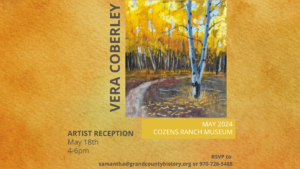
The rails pushed higher and higher up the mountains until they reached a station named Corona, meaning the crown of the continent.

Corona was the highest point in the world with a standard gauge railroad and the journey from Denver in the winter was perilous at best.

Huge snowplows were required on either side of the Divide to keep the tracks clear.

Eventually, in the late 1920s, a tunnel was dug through the range, eliminating 22.84 miles of track and the breathtaking journey over Rollins Pass.

The railroad reached Granby and Hot Sulphur Springs in 1905 and Kremmling in 1906, and played a significant role in building the population of Grand County.

In 1900 the total resident population of Grand County was only 741, but grew to 1,862 in 1910.

Christmas at Fraser

The lights dimmed; mothers had already found their seats after coming from the classrooms where they had put makeup on little children’s faces and checked their costumes to make sure angel wings and halos were secure and costumes were on right side round.  I was at the piano, music and script lined out. The gym was full to the brim, every seat taken, with folks lining the sides and back walls, for the whole town had turned out.  Early birds got the seats!  Christmas wasn’t Christmas in the Fraser Valley unless it included the program at Fraser School (now the Town Hall).   I began the overture and chatter stopped.   I had played for this event for ages, starting in 1958.  High school students were gone by then, moved to the new Union High School in Granby, but 7th and 8th graders were still there.  And in 1958, the first kindergartens in the district were established.   It was a time of excitement and anticipation, of fun, and of panic? Well, no, not panic, for the teachers were beautifully organized. 

The program was chosen during October. Each teacher had a specific job. For instance, Martha Vernon, the art teacher, did sets.  Helen Hurtgen was responsible for dialog.  Edith Hill did costumes.  Nancy Bowlby was in charge of the music.  Others coordinated the whole.  And I played the piano, with Nancy sometimes accompanying me on her violin.  

Mothers were asked to contribute sheets and any fabric they could spare.  Patterns and material for costumes went home to be sewn into various sizes and shapes -- angels, gingerbread men, knights or royalty.  In the gym, we stitched on finishing touches, bright patches to decorate jester outfits, townspeople, and such, while watching various groups practice. Bits of tinsel became crowns, tinfoil turned into wands, cheesecloth into wings.  Lace scraps and sequins added color and “class.”   The budget was extremely minimal at first, but over the years, more money was directed to Christmas programs.  Instead of old sheets, we could buy cotton fabrics, velveteens, sometimes satin.  One year I even stopped by a furrier’s in Denver and begged some fur scraps.  Were we uptown then!  We had fur trim around the necks, cuffs, and hems of the costumes for the prince, queen, and king.  

The day before the play, PTA mothers gathered in the gym to fill brown paper sacks with an apple, orange, nuts, and candies, provided by R. L. Cogdell from his grocery store.  

Every single child in school took part in the play, as a class, except for those with speaking parts, of course.  Fraser grew and grew, then as now. Soon the 7th and 8th grades moved to Granby.  Then the 6th graders went, but the 4th and 5th graders handled the leads neatly.  Our stories were usually simple Christmas tales, but sometimes we tackled ambitious efforts such as the Nutcracker Suite or a version of Gilbert and Sullivan.   The only children not included were the Jehovah Witness youngsters.  They couldn’t be in the play and they couldn’t come watch it either.  We all felt very sorry for them, because everyone had such a wonderful time.  Their teachers tried to give them special projects to entertain and interest them while they sat off in a corner or in their classrooms.   The plays always went well.  Tiny kindergartners came out onto the stage, to stand behind the colored lights.  They knew their song perfectly in practices, but I have to admit that a number of them usually stood silent, stunned by that mass of faces looking up at them.  No matter.  They were darling. “Hi, Mom,” some were sure to call. “Mom” beamed.  

There might be a glitch or two every year. For instance, little Diane was chosen to do the Arabian dance in Nutcracker Suite.  Her parents were dark, as she was, and she was slender as a dancer. Trouble was, she didn’t have an ounce of grace in her body at that stage of her life.  I thought Nancy Bowlby was going to have grey hair before she got that child moving properly.  But the night of the program, Diane looked like Anitra herself, doing her exotic dance.   One year the king jumped his cue and entered on stage.  His first words were, “Did I miss anything?”  The prince muttered, in an aside, “Yes, three pages!”  But the cast went on as if nothing had happened, while down at the piano I sat, flipping pages rapidly, trying to figure out where the dialog was now.  

Another year, our son James was to take part in a minuet.  “Uck!  I have to touch a girl?”  By the greatest good fortune, he broke his leg and got to be a guard at the palace door, standing at attention on crutches, while another boy took his place.  (I think he did that on purpose.)   Songs and parts were adapted to the talents of the students.  We had five boys once, who couldn’t talk, dance, sing -- anything.  So they wore monks’ costumes and filed on stage, supposedly singing a Christmas carol, but supported strongly by the cast present.   Another time, Twyla’s parents couldn’t come, so Miss Vernon took her home to get ready. Now, Twyla usually looked like a dirty ragamuffin, but after a bath and hair wash, she truly looked like the angel she portrayed.   For the finale, the entire school came on stage to sing a last carol, with the audience joining in.  Then Santa showed up to distribute the goodie sacks, and the great night was over.  Coming out into the quiet night was a wonderful feeling.  Sometimes we moved through drifts of new falling snow; sometimes the sky was filled with icy stars.  Gay lights showed in windows throughout town. 

We never talked much on the way home, as we thought of the play, the success of everyone¹s efforts, and how happy the children had made their parents and families.   My last program was the first year after the new school was built.  It was fun still, but the school population had grown enough that it was impossible for whole classes to participate as one. Things weren’t the same as they were in the little old school.

Topic: Mining

Mining

Ghost towns and broken dreams are legacies left by the early miners and prospectors of Grand County. Ever since 1879 when the first mines were staked out and claimed on Bowen Mountain near Grand Lake, “gold and silver fever” grew like an epidemic. Men blinded by greed and prospects of a better tomorrow scrambled to the Kawuneeche Valley with picks and shovels to unearth their fortunes. Women worked just as feverishly along side their men and encampments gave way to mining towns almost overnight. Land offices, eateries, and boarding houses sprouted like wild flowers.

Claim jumping became a common practice, resulting in fights and even murders. Most of these injustices would go unpunished, for no one wanted to risk losing their chance of riches. In Grand County the mother load was a false prophecy, as only small quantities of low grade gold, silver, and lead ore were found. In a few short years, Gaskill, Teller City, and Lulu City, three of the more noted settlements, suffered the same fate as the other boom towns. By 1885 the mining boom had ended in Grand County and ranching had taken it’s place as a sustaining industry.

Topic: Biographies

Stephen Bradley


Article contributed by Karen Wischnack


Born to a Wisconsin doctor in Chicago November 12, 1916 was one of seven skiing sons by the name of Stephen J. Bradley.  His talents in skiing showed up at a very early age.  By the time he was attending Dartmouth College his talents were apparent and was a top competitive skier.  He skied in the slalom, downhill, jumping and langlauf while on the college's team.  Steve then was called to serve his country during the World War II Army service.  After his discharge he then attended and coached skiing at Colorado University. 


In 1950 Steve became Winter Park's executive director.  During his employment at Winter Park he guided it from a four rope tow/three T-bar local ski area to a major resort of 770 acres with 13 chair lifts.  His brilliance in design led to the Balcony House, the Base Lodge which was one of the first ski area structures to utilize solar heating, the restaurant in the midway proved to be a model for the "scramble" system of food service and then there's the Mary Jane section of Winter Park which was another one of his talents.


Stephen was given the name "Father of Slope Grooming" in 1952 when he then invented the famous Bradley Packer-Grader when experimenting with slope grooming.  The invention was a one man gravity-powered slope grooming device which revolutionized the ski maintenance industry.  Nick-named "the Purple People Eater".  This machine was a mogul-cutting snow groomer that was 5-foot-wide corrugated culvert that a skier would drag down hill or as they said " A hardy mountain crewman" who risked his life by being devoured by the spinning rotor.  As skiing became more popular, skiers started demanding that the slopes be groomed.  Nature was no problem but not everyone wanted to ski moguls.  This Bradley Packer was a way to reduce the mogul's and keep snow on the trails by flattening the snow.  "It was a pretty scary thing" supervisors claimed.  Grooming was soon transferred to a line of tracked vehicles now known a "Snowcats". 


Stephen served as President of the NSAA (National Ski Areas Association) and helped organize Colorado Ski Country USA and the Colorado Passenger Tramway Safety Board before his death in Longmont November 13, 2002.  You can find him as an honored member of the Colorado Ski Hall of Fame and in the National Ski Hall of Fame.


Topic: Biographies

Horace Button

Horace Button was 10 years old when he saw the ski jump competition at the 1911 First Annual Hot Sulphur Springs Winter Sports Carnival.  A railway man noticed that Horace was spellbound.  The man asked Horace what he wanted to be when he grew up, to which Horace replied, “I want to be a ski jumper like Carl Howelsen.” The seed had been sown, and Howelsen taught Horace the skills of skiing.

Horace Button became an All-American Skier.  Winning awards over nationally recognized competitive ski racers.  The basic knowledge he learned from Howelsen was passed on which in turn sent Jim Harsh of Grand Lake, to be on the 1932 United States Olympic Nordic Combined team.  The Olympics were held at Lake Placid, New York. 

Barney McLean of Hot Sulphur Springs, also benefitted from Mr. Button, who was waiting at the ski hill every afternoon, when school hours were over.  Barney was a 9-time national champion, and a 3-time Olympian.  In 1948 he was Captain of the men’s alpine ski team that competed at St. Moritz, Switzerland. 

Horace Button continued to advise ski techniques to students of East and West Grand School Districts, helping them compete at the university or Olympic level.  They were; Dale Thompson, Wes Palmer, Zane Palmer, Landis Arnold, Todd Wilson, Kerry Lynch, Tim Flanagan, and many more.  Horace coached 12 national champions. 

Horace also was an accomplished artist. His specialty was carton ski scenes.  Tim Flanagan honored Mr. Button for his work with local youths and created the Horace Button Ski Foundation.

Horace Button, Jim Harsh, Barney McLean, and Carl Howelsen have been inducted into the Colorado Ski Hall of Fame. Barney McLean and Carl Howelsen are honored at The National Ski Hall of Fame.

Topic: Mining

Teller City, Crescent City and Tyner

The original Grand County contained North Park as well as Middle Park, and during the mining boom of the early 1880's there were several mining camps east of the modern town of Rand. It was several years after the mining boom northern area of Jackson County was created.

Teller City was founded in 1879 and named for Colorado's famous Senator Henry M. Teller, who later became U.S. Secretary of the Interior.  By 1882, the population of Teller City was about 1200.  It had a fine hotel with 40 rooms, a newspaper and two steam saw mills.  It was a lively Old West town with twenty seven saloons and a number of "houses of ill repute".

Some high quality ore assayed at Teller City was as much as $3000 a ton, but most of that soon ran out and by 1884, the high shipping costs to far away smelters dropped the price per ton dropped to $20. The best mine, Endomile, was three miles from town.

Crescent City, southwest of Teller City had an even more brief existence, but there was population enough for a U.S. Post Office in 1880. 

Rumors of valuable silver three miles sough of Teller City drew a number of prospectors to found the camp known as Tyner.  John Noble Tyner was the First Assistant Postmaster General of the United States and visited the mining camp so named in 1879.  He promised the miners a weekly mail delivery if at least 2 miners mined through the winter.  Tyner had been a special agent for the Post Office from 1861 thru 1868, at which time he was appointed to serve in an open seat in the U.S. House of Representatives for Indiana.  He ran for election win the appointed term ended and was elected and continued to be reelected and serve as a Representative until 1875 when President Grant appointed him Second Assistant Postmaster General.  Grant would later appoint him to the "big job" of Postmaster General in 1876. 

Tyner worked to elect Rutherford B. Hayes in 1876 and after Hayes was elected and took office in March of 1877, Hayes appointed a new Postmaster General, but gave the second spot, First Assistant to the Postmaster General to Tyner.  Historians suggest that Tyner's demotion angered him to the point that he allowed wide spread corruption in the day to day operation of the Postal Service which was his responsibility to over see. He resigned in 1881 under great public pressure from what became known as the "Star Route Fraud scandal".  He would remain a political figure  being appointed  various positions  with the U. S. Postal Service until shortly before his death in 1904.  Although indited three times for corruption in his Post Office management, he was never convicted.  The "Star Route Fraud scandal", may have local implications.  It had to do with over charging and providing needless postal routes, roads and post offices and kick backs to politicians from contractors .

Topic: Ranching

Murphy Ranch

It's hard to imagine that there was a life before all the new homes filled in the spaces of the spacious lands around our towns. With all the high-tech innovations and new homes rising, ranch-life as it was in the late 1800's isn't thought about much. We're visiting today with John Murphy of the Murphy Ranch to capture some of the labors of ranch-living as he remembers it--before it is all too forgotten.

The Murphy Ranch sits just outside of the Town of Granby and on a somewhat overcast morning, John Murphy is seen ambling down the road heading toward the cabin just above his log home where he enjoys life with his wife Carolyn. Driving next to him, I ask if he'd like a ride. "No", he said, "this is a good walk for me". In his hand he holds an electric bill that he is passing on to his tenant. He looks at the company car and asks, "Is that one of those hybrid cars?" I replied that it wasn't and he just shook his head.

John with his gentle face sits with Carolyn on the sofa and begins the story of the Murphy Ranch. Jim and Margaret were the oldest Murphy siblings; John being the youngest. It wasn't uncommon to ride to school on horseback. John attended school in Granby where the apartments now stand across from the Community Building. In the winter, the horses would be stabled in a barn by the Trading Post (now Grand Mountain Trading).

"On the ranch, we milked cows and sold cream," John said. "Mom sold a lot of butter too. She'd milk 5 gallons of cream and head to the depot. Most of the cream was shipped to Denver and Boulder. We had a well out back and Mom would store the butter in a bucket and put it down in the cold well-water. In the winter, we would saw off blocks of ice from the river and pack it in sawdust to store in the cold shed where we kept our meets. Meats were screened in. We raised goats for meat.

Our first electric poles were set in 1942. Got all the poles in past the Barnard Ranch. Then the war started in 1945. Before we had electricity, we used kerosene lanterns. Mom loved to read and she read by the light of oil lamps. We used kerosene lanterns to milk the cows and the wind would often blow the flame out. With no bathroom facilities, you would have to use the outhouse in the middle of the night. We'd go to bed early because we had no lights. It was dark except for the oil lamps. Once we had electricity, we stayed up longer and read the Farmer's Almanac and Capper's Weekly.

Every year we shipped 35 carloads of cattle to Omaha with cattle from Kremmling and North Park ranches (Linkes, Ainsleys, Sheriffs) and it was a big excitement for us. We'd ride in the caboose and travel back on the California Zephyr." After the war, Japanese families would live in colonies above the ranch. They helped harvest the lettuce fields. Lettuce was a big commodity and there were four packing plants set up on the riverbed. They shipped lettuce to Chicago, New York and Yuma, Arizona. They were hard working families. A lettuce warehouse was sitting where the Old Grand and Silver Spur Restaurant now sit. Lettuce was raised from Yampa to Tabernash in those early years. Suddenly, it disappeared because they found rust in the lettuce. Some say it was the soil.

"Things were tough but we always had meat and potatoes. Never missed a meal. The only thing we didn't have was fresh fruit. At birthdays, we always had a special treat of concord grapes. A juice guy would come every few weeks. We'd love to see him, and he loved to see us-Mom always fed him."  After the war, there were more responsibilities on the ranch. There was lots of physical, hard labor. Brother Jim was commissioner for two terms.

John and his family have seen a lot over the years. Like many other ranchers, they have seen and experienced it all. Unlike today with all the modern conveniences, their lives were much different then and few today would know what it was like in those early years. Each ranch story is different in its way, but all have the same backbone---hard working families with a labor of love for ranch-life.